The Friday Burrito: Last Chance Saloon

The Friday Burrito

Chubby Alonso is a sentimental man, so he gets rather introspective when he senses that things might start to end. This Friday’s Burrito spots some stuff from this week that suggests that certain players, clubs and even countries are either edging towards their last leg, or are on the cusp of new beginnings. Who knows? Chubby does, or so he says.

Here’s some of the picks of the week, thoughtfully chosen to go into today’s wrap:

1. Man On A Mission

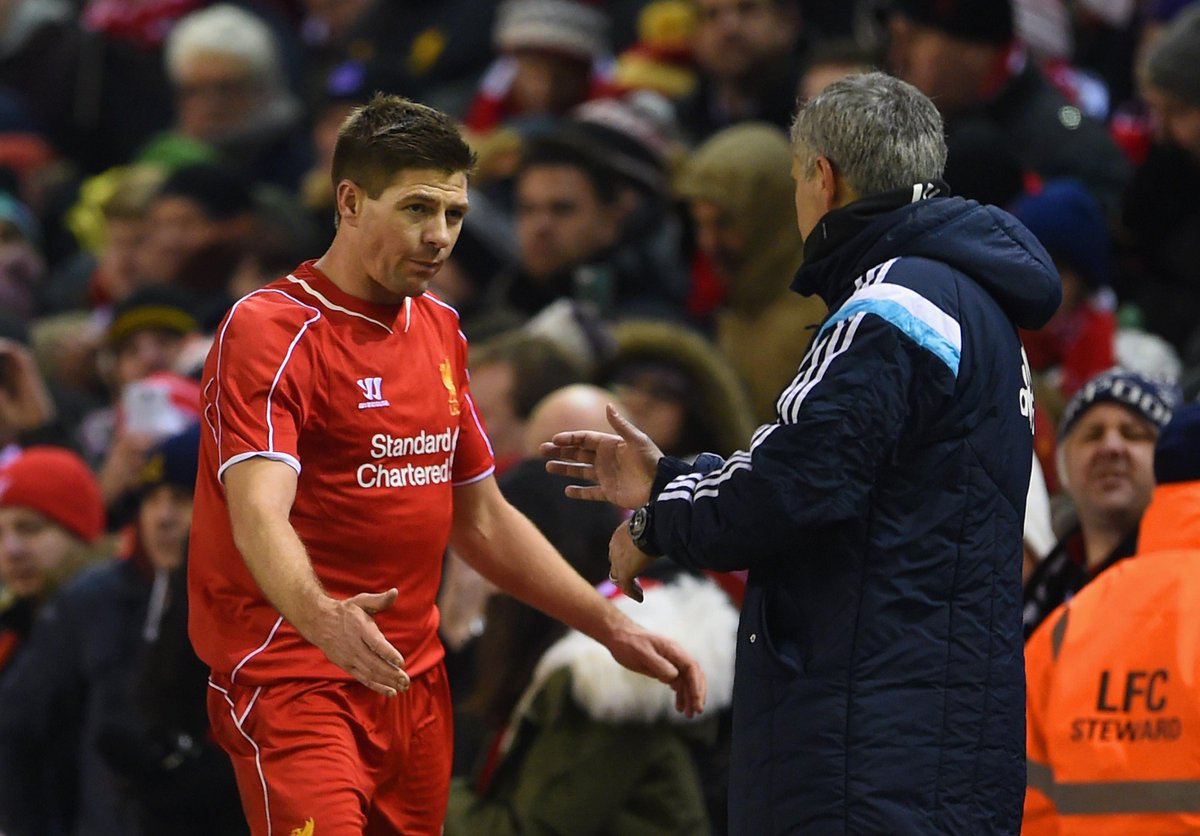
Steven Gerrard is officially running out of time to take Lucas Leiva back to Wembley. After Liverpool’s difficult loss to Chelsea in the Capital One Cup semi-final, the sobering realisation for Gerrard and for many football fans around will slowly kick in that he has just one last shot left at Wembley glory. It is difficult to put into words what Cup Finals mean to Steven Gerrard and, rather synonymously, what Gerrard means to Cup Finals. As one of the Premier League’s greatest he has suffered the subtle ignominy of living for the Cup while the other Greats fight it out over the Big League Trophy, and his little squaring up to Dirty Diego late into the game was a picture of both resignation and regret. Gerrard’s radio silence after the match was at loud as it gets and he will be saving his breath for the FA Cup replay at Bolton next week – beat them and only Crystal Palace stand in his way to a Wembley return. Of course, last weekend’s cupsets mean that the magic of the FA Cup is very much alive, but in Stevie G, Liverpool might have their very own Wizard of Wembley.

2. Hulk Smash
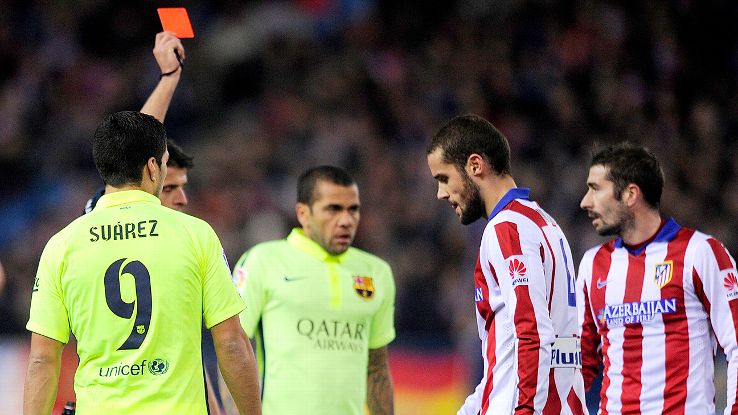
History may be written by the victors, but it is the defeated who will remember most. What Liverpool and Atletico Madrid fans will remember in the wake of their mid-week Cup exits is how their team’s efforts were ruined by some reserved (Liverpool) and reckless (Atletico) refereeing. Liverpool fans will point to what the referee missed – most glaringly the two Costa stamps that left him eight away from a free coffee and three games in the stands. The Atletico faithful will be furious by what their referee didn’t, effectively end the game by sending off captain Gabi at half-time, allegedly for saying “Jesús, it was a penalty and a red card” – ‘Jesús’ of course, being the name of their sinner, rather than the Saviour.

While the vitriol aimed at the referees are not unfounded, perhaps they are misplaced, and conceal some of the deeper problems in football. It is little coincidence that two of the managers involved in the games are two of the most controversial – Jose Mourinho for his megalomaniacal image of his players and his ways, and Diego Simeone for his infectious, fiery rage. There comes a point when the means will stop justifying the ends. Mourinho may have got off relatively scot-free this time – Dirty Diego’s bit of justice aside – but the same can’t be said for the other Diego. Simeone’s passion has rubbed off on his players to great success – Torres being the latest beneficiary, with all three of his goals for Atletico coming within a minute post-KO, post-Simeone – but it was this same influence that saw a red mist descend upon a bullish Mario Suarez and a petulant Arda Turan, who could have so easily seen red too for his manic moment of boot-tossing madness. If Simeone doesn’t find a way to keep his team’s inner-Hulk under control, Atletico – and football – may soon be counting the cost.

3. Luck of the Draw

The performance of African nations have always appeared to be rather patchy-per-tournament, an impression that has always made the African Cup of Nations almost quite predictable in its unpredictability, and to me, a little more than a distraction from the big lights of the European leagues. This week saw the AFCON get its group stages out of the way, finally with a bit of fanfare. With both Mali and Guinea ‘sharing’ second place in the group having having drawn all three of their games 1-1 (ie. P3 D3 F3 A3), the last qualifying spot went down to a drawing of lots – the third time in AFCON history. Yesterday, on the fourth floor of a haughty Hilton hotel, a representative of each team dipped their hands into a bowl – fresh from the kitchen – and picked out their respective fates. Joy for Guinea, jealously from Mali, and plenty of resentment towards the Confederation. With a bit of foresight, the CAF could have taken a leaf from UEFA’s book: a similar situation played out between Turkey and the Czech Republic in Euro 2008 would have demanded a penalty shoot-out – probably the more sporting solution, even if hoping for the luck of the draw is in fact the most technically fair one.

4. The Boys Are Back

The Bundesliga comes back tonight when Bayern takes on Wolfsburg, still a top of the table clash even if a whole 11 points separate the sides. The weekly headlines in the first half of the season had gone predictably along the lines of a Bayern steamroller to victory, a Dortmund slump to defeat, or surprisingly often, a mix of both. As the second half kicks off it will still be intriguing to see if Wolfsburg can properly lay a claim to top spot in the league outside Bayern’s, or if Augsburg’s impressively inspirational streak can continue through the season; but there will be no storyline quite as gripping as the rise of a fallen European darling. The lengthy German winter break could have done no team more favours than Borussia Dortmund and there is no reason why they won’t come back fresh to the fight, especially with Marco Reus back to lead the charge, and especially with the January window doing little to immediately suggest a change in fortunes for most of the teams. Most, of course, with the exception of VfL Wolfsburg, whose signing of Xizhe Zhang from Beijang Guoan forecasts a sure-fire windfall in the Asian market, and foreshadows an intriguing subplot to keep all Eastern aficionados interested: as Shinji’s star slowly falls, how quickly can Zhang’s spring?

5. Parting Gift

On the eve of what might turn out to be Australian football’s biggest day, big word on the big street is that Asia want Australia out. AFC President Shiekh Salman today confirmed the growing sentiment amongst the Arab nations disgruntled by what they perceive as Australia’s parasitic participation, rather accurately echoing some of the xenophobic concerns simmering around the real world. Australia’s entry into the AFC nine years ago was welcomed under the pretext of increasing the image and standards of Asian football and little has pointed to the contrary. If anything, the A-league’s increasing prominence, as well as the continued presence of Australians plying their trade in the big European leagues, should suggest that the AFC would be worse without the Australians.

At the heart of this gripe appears to be a massive FOMO, or for those above 16 – a Fear Of Missing Out. With Japan and South Korea as fixtures for World Cup qualification, the host of West Asian nations – Iran, Iraq, Saudi Arabia, Jordan, UAE, Uzbekistsan et al. – have to fight it out with Australia and China’s irrepressible emergence for the last two spots. Not that this is a sure-win for Australia – the land Down Under are ranked just 10th in the AFC, 100th in FIFA, and have failed to bag the Asian Cup in their three attempts thus far. An Australian win tomorrow may toss more salt into wounds but the last thing the AFC should do is run.

The case for Australia’s participation 9 years ago remains the same today, and perhaps ever more relevant than before; more competition is good competition, and one swallow does not a summer make. The Gulf nations are on the cusp of something great and must do better than to count World Cup appearances as a measure of success: Iran and Saudi Arabia’s meek performance over the past few decades have done little to raise the roof, and if Qatar want to be anything more than a filler host nation in 2022, the unhappy mob from the Middle East will have to stop pointing that finger outwards and start paying attention to the three staring back at them.
The Friday Burrito: Restless for Redemption

The Friday Burrito

Chubby Alonso has a tasty tasty wrap going on here. It’s got big guys, it’s got small guys, and it’s got lots of middle eastern guys playing out probably the great game in Asian Cup history. It’s a fat one today, so we’ll jump right in.

YUM:

1. Getting Up For The Cup

Chelsea squared up to Liverpool in midweek and looked, well, rather square. They emerged unscathed with a 1-1 draw – a result that means a win at Stamford Bridge in the next leg will guarantee Mourinho’s first return to Wembley – but hardly looked convincing. Hazard’s spot-kick was Chelsea’s only shot on target against a Liverpool side that looked significantly hungrier of both sides. Chelsea’s excellence may be making it hard for them to see the Capital One Cup as something worth getting up for.

In contrast, Liverpool had plenty of motivation going into the game – from Stevie G’s redemption, to Brendan Rodger’s professional rivalry with Mourinho, to the fact that this Cup is Liverpool’s most realistic chance of winning anything remotely shiny. Mourinho might just be missing a Mr Motivator to partner the waning John Terry in the dressing room in shifting the spirits a gear up when life isn’t so smooth sailing. In the post-match conference Mourinho had apparently joked about signing Steven Gerrard on loan at the season’s end – but what if he wasn’t?

2. Missing Men
Osvaldo
On Wednesday night, Tottenham Hotspur played Sheffield United in the Capital One Cup Semi-Final first leg. Proudly leading the troops out of the tunnel was none other than Captain Emmanuel Adebayor. Wait what? The words go together awkwardly and angrily like two corners of a jigsaw puzzle. He didn’t disappoint the perplexed fans either – putting in a forgettable shift and leaving the field on the hour to the chorus of boos they were waiting to deliver. The problem with Adebayor is not that he appears indifferent and disinterested, but that at various points in his career, he didn’t. Recall his run of good form last season, or how fired-up he looked when he famously scored and celebrated against Arsenal while at Manchester City.

The fear is that Adebayor may be joining the Borgade brigade (“Chelsea offered me a contract, I signed the contract, so what is the problem?”) of players who can’t care beyond their next paycheck. That certainly looks to be the case for Southampton’s record signing Dani Osvaldo, who is still on the club’s books. He was tossed out on loan from St Mary’s after 13 games for headbutting now-captain Jose Fonte during training and has just been sent packing back by Inter after simply disappearing for two days. The man who signed him? Mauricio Pochettino, the same guy who five months ago made Adebayor his third choice captain and the lumbering Younes Kaboul his first. Le Poch may have an eye for footballing talent, but he’s not looking too good a judge of character to me.

3. Baby, Baby, Baby

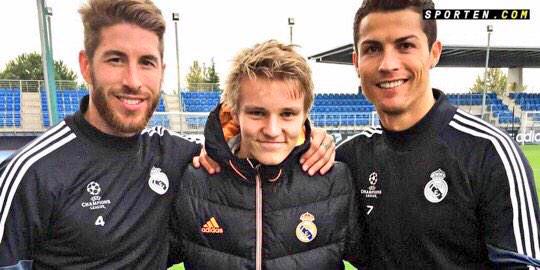
The biggest news this transfer window is undoubtedly Real Madrid’s signing of football’s Justin Bieber, although the significance of this move may only be unravelled between one year to never. Martin Odegaard may be the full package with his boyband blonde looks and youtube skills, but the jury is out on whether he could finally be Madrid’s own Messi, or if he’ll end up as the world’s next Freddie Adu – the last teenager to really thrill and then torpedo.

There is cause to be optimistic though: under the guidance of Carlo Ancelotti and Zinedine Zidane, he has two men with the eye and the patience for talent, and at Real Madrid he will get the best grooming to deal with all the limelight. He already looks the part: when asked to choose between Ronaldo and Messi he picked his new teammate (“Ronaldo, so far”), even though he had once publicly professed his admiration for Messi on Twitter. It would have been real interesting to see if Barcelona would have been the better fit for him though, but for their unfortunate transfer ban; that’s just what they get for putting their hands in one teenager’s cookie jar and getting their sleeves caught in it.

4. Second Chances

The Annual January Jenga happens for two main reasons: one, to add reinforcements to a squad (Cuadrado); two, to reinvigorate a player’s career. It is strange to say this, but if Andre Schurrle finds the courage to leave a Chelsea team destined for some silverware this season, he would join Lukas Podolski as the second World Cup winner looking for some genuinely meaningful employment. Podolski’s loan to Inter is already looking good, linking up with Bayern outcast Xherdan Shaqiri – scorer of the World Cup’s 50th hat-trick just 7 months ago – in beautiful fashion to send Inter into the next round of the Coppa Italia.

For Sebastian Giovinco though, it appears that it is Canada, not Italy, to be his place of choice for finding himself. He follows a whole series of stars into the US of A but at the same time walks his own path. Not only will he be the highest paid player in MLS history (yes, beating out even David Beckham himself), he might just be the first top European player to be heading there in his prime. Of course, I use ‘top’ rather loosely, given that he has barely made 40 appearances over the past two seasons for Juventus (most of them coming as a substitute) but this is a man who exactly a week ago had starred in Juve’s 6-1 demolition of Hellas Verona (granted, not a tough task) and whose startling form for Parma less than four years ago had earned him plaudits, predictions, and a call-up to Prandelli’s Euro 2012 squad. Del Piero’s one-time heir apparent may not have taken his throne in Turin but could certainly come good in Toronto if he carries half the class and humility that made the Italian maestro such a loveable figure in his own cross-continental traverse in Sydney.

5. The Battle of Canberra

Speaking of Sydney, it’s finally kicking off in Australia. The group stages of the Asian Cup 2015 have gone by with minimum fuss: no games have been drawn, no surprises have been had, the underdogs are out, the favourites are through, Timmy Cahill has scored a special goal (a wee bicycle kick), is officially the Australian Sniper, and will probably have a film made about him in the next decade.

So step up Iran and Iraq with their self-explanatory bi-lateral history to play out what must be the greatest game in Asian Cup memories. Nothing short of a chronological recount of this game will do for an excited Chubby Alonso. Bear with me:

Background: Not only were Carlos Quieroz’ Iran the highest ranking Asian nation in the cup, they had yet to concede a goal in the group stages. Then again, Iraq had hitherto conceded just the single goal – from the spot against tournament favourites Japan. Iraq’s captain Younes Mahmoud makes his 135th appearance, while Iran’s Javad Nekounam steals Ali Daei’s record by making his 150th.

’24: Iran take the lead early on through Sardar Azmoun, the country’s next-big-thing. Azmoun had already begun stirring up the hype with a pretty fancy goal against Qatar.

’43: The game really gets going from here on. Jalal Hassan (Iraqi goalkeeper) gathers to collect the ball from Pooladi (Iranian striker), they barely get tangled up but square up to each other, and as Jalal shoves Pooladi to the ground, Ben Williams (referee) shows Pooladi a yellow and walks away. At this point Younes Mahmoud (Iraqi captain) runs up to Williams to remind him that Pooladi had already been booked (he had). Williams appears to ignore what the Iraqi players are saying, thinks about it, and then finally whips out the red card.


Controversy: Ben Williams, Australia’s ‘best referee’, is not shy of controversy and has a reputation in the A-League for bearing grudges. In Iran’s first game (a win over Bahrain), Carlos Quieroz had openly criticised Williams for not being “at the level of the game”. Put two and two together and you’ve got a picture of a fuming manager screaming into a referee’s ear down the tunnel.

‘117: At 2-2, Iraq win a clear penalty. Younes Mahmoud, now on 53 goals in 135 caps, is the captain of the team and the main penalty-taker. But having tried and skied a panenka penalty against Iran in a friendly less than three weeks ago, and then missed against Palestine four days back, he’d handed the duty to 20 year old Dhurgham Ismail, the youngest player on the side. Soaking up all the pressure, he scored what he must have thought was the winning goal. (Cue celebrations etc.)

‘119: But it’s not drama without a last minute equaliser. The Iranian goalkeeper joins the team at a corner. From an excellent delivery the ball is headed onto the post and the rebound is then cracked onto the bar. Finally from that rebound, Charlton Athletic striker Reza Ghoochannejhad headed the ball home. 3-3. (Cue bigger celebrations etc.)

Penalty shootout: First two penalties were missed, many more great ones were taken. At 5-4 to Iran, Iraqi captain Younes Mahmoud steps up. Recall his recent history with penalty misses, especially that panenka against exactly the same goalkeeper etc etc. Standing on the line between fool and hardy, Mahmoud attempts the panenka again with redemption on his mind – this time with much sweeter results. This man has balls, but then again he is Iraqi. Iraq don’t ruin the fairytale, and go on to win the Battle of Canberra.

Woah.

(UPDATE: Japan have been knocked out by the UAE after two quite superb goals for either side saw the match enter a shootout. Rather unceremoniously it was Keisuke Honda and Shinji Kagawa, two of Japan’s biggest names, who missed from the spot to send UAE through. It really is all kicking off!!)